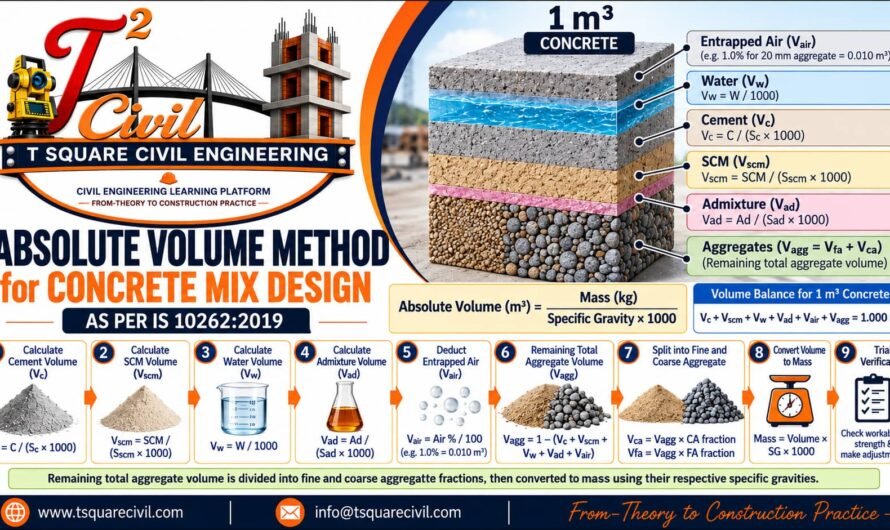
Absolute Volume Method for Concrete Mix Design as per IS 10262:2019
 by
Learn how the absolute volume method is used in concrete mix design to calculate cement, water, SCM, admixture and aggregate quantities for 1 m³ of concrete.

Civil Engineering Learning Platform: From Theory to Construction Practice
Learn how the absolute volume method is used in concrete mix design to calculate cement, water, SCM, admixture and aggregate quantities for 1 m³ of concrete.
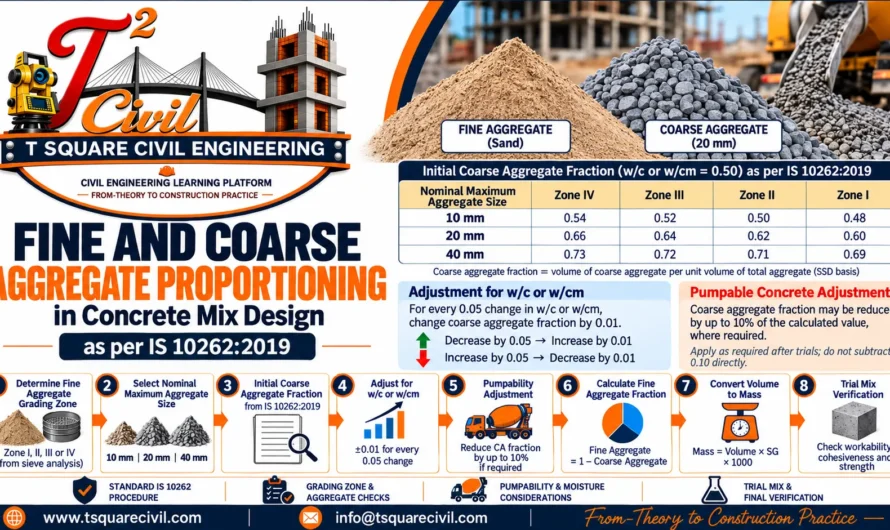
Learn how to calculate fine and coarse aggregate proportions in concrete mix design using grading zone, aggregate size, w/cm adjustment, pumpability and specific gravity.
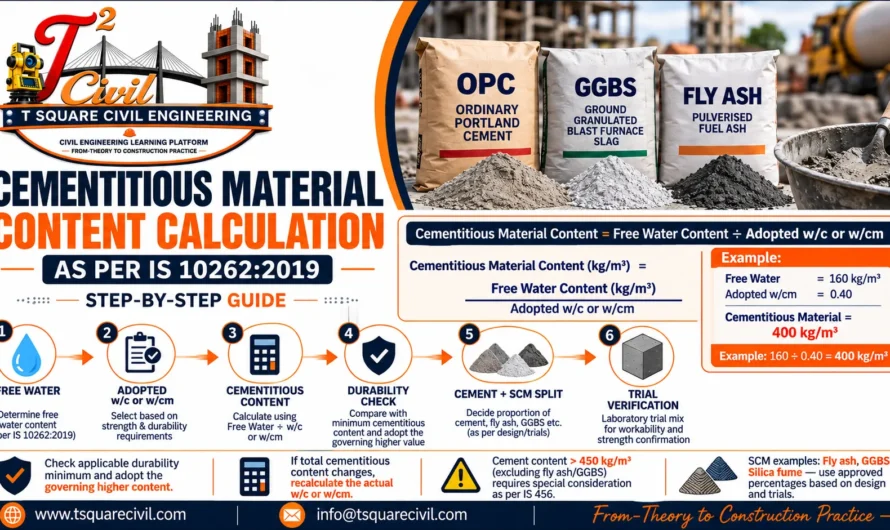
Cementitious material content is one of the main calculations in concrete mix design. Once the preliminary free-water content and the adopted water-cement or water-cementitious materials …
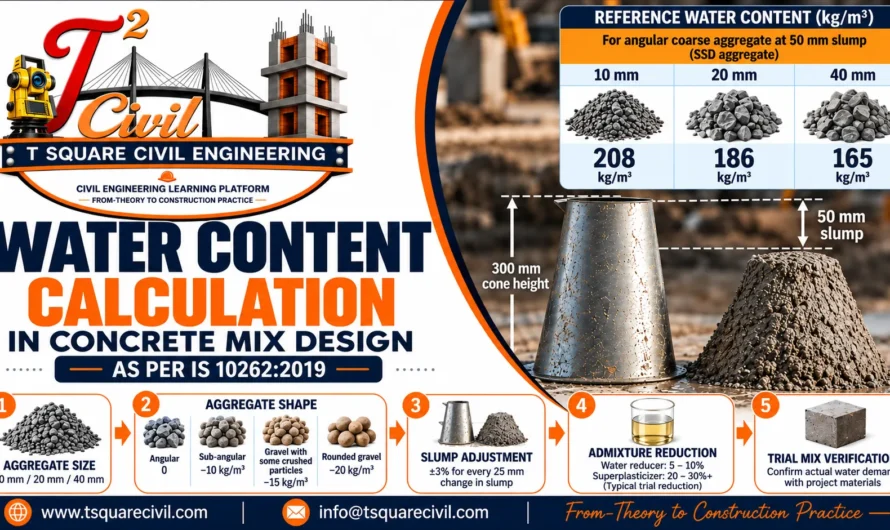
Learn how preliminary water content is calculated in concrete mix design as per IS 10262:2019 using aggregate size, slump, aggregate shape and admixture adjustments.
Concrete mix design is the systematic process of selecting and proportioning cementitious materials, water, fine aggregate, coarse aggregate and chemical admixtures so that the concrete …
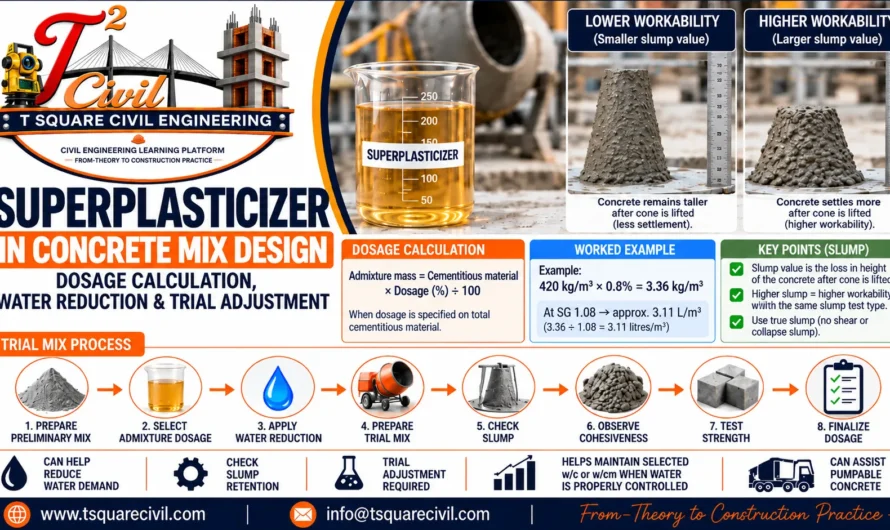
Superplasticizer is one of the most important chemical admixtures used in modern concrete mix design. It can help obtain the required workability at a lower …
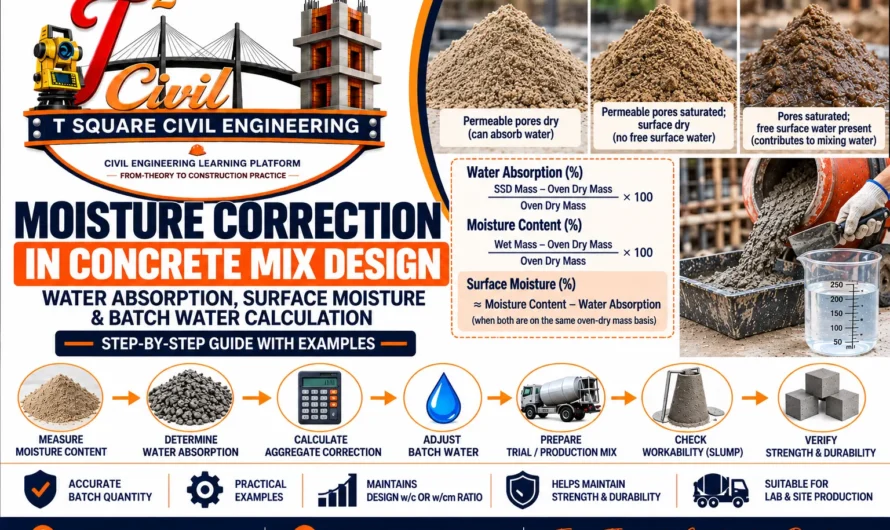
Learn how to calculate moisture correction in concrete mix design using aggregate water absorption, SSD condition, actual moisture content, corrected aggregate weight and batch water.
Learn the concrete trial mix procedure as per IS 10262:2019, including Trial Mix No. 1 to 4, workability checks, moisture correction, adjustments, cube testing and field approval.
Learn which cement, aggregate, water and admixture tests are required before concrete mix design, and which test results are directly used in mix calculations.
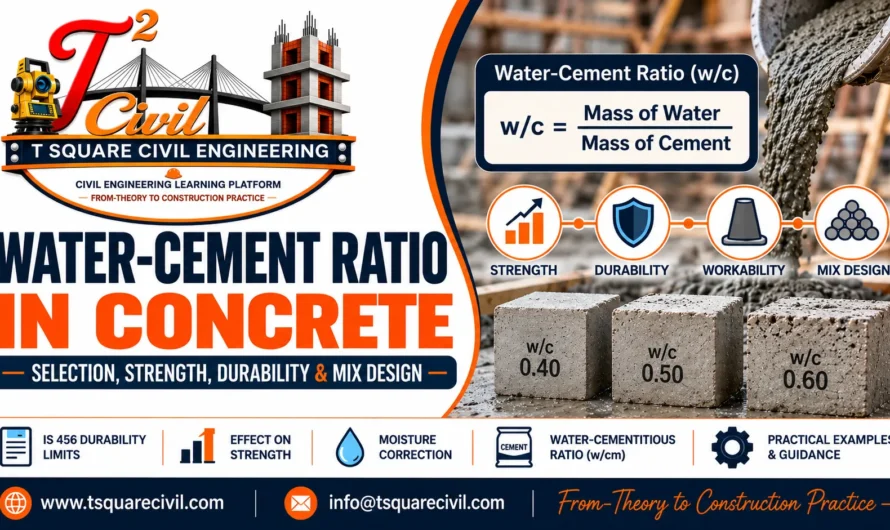
Learn how to select the water-cement ratio in concrete based on strength, durability and exposure conditions, with formulas, IS 456 limits, examples and practical mix-design guidance.